Enterprise Roll Quality Software
Digital Twinning on the rewind. Automated waste removal on the unwind. Yield analytics across every process — built for plant managers and operators alike.
Digital Twinning on the rewind. Automated waste removal on the unwind. Yield analytics across every process — built for plant managers and operators alike.
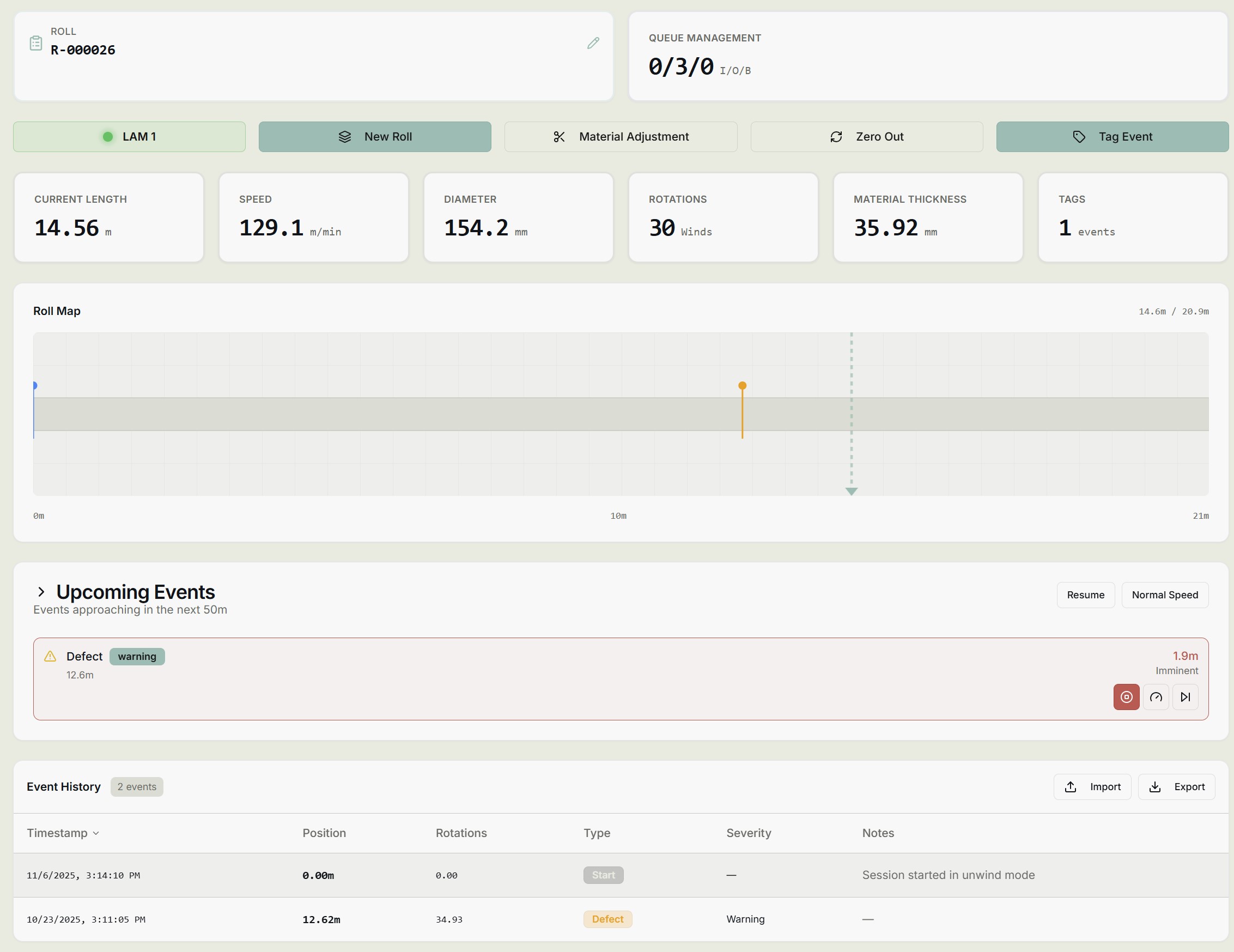
See the full RollTagger interface in action — request a guided tour or self-service demo
Industrial-grade technology that delivers measurable ROI — from sub-millimetre precision to enterprise-wide traceability
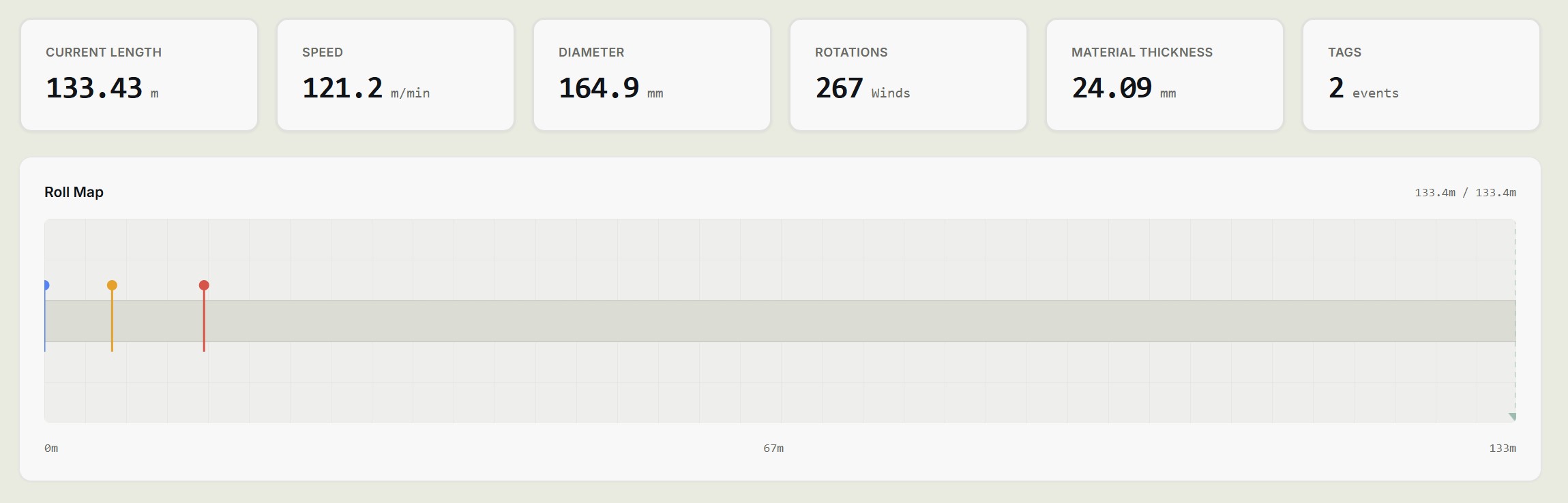
Linear and rotary encoders sampled at 100 ms intervals for sub-millimetre position precision and live diameter calculation.
All data stored locally on the Revolution Pi — no cloud dependency, no internet required during production.
Rolls transfer automatically between rewinders, unwinders, and coating lines via .rtag file handoffs over the local network.
Automatic quality check at every 10-wind milestone comparing actual to expected position from the source rewind map.
Parent–child traceability across every production station from raw material inspection through final QC unwind.
REST API and machine I/O interfaces for connecting to upstream work order systems and downstream vision systems.
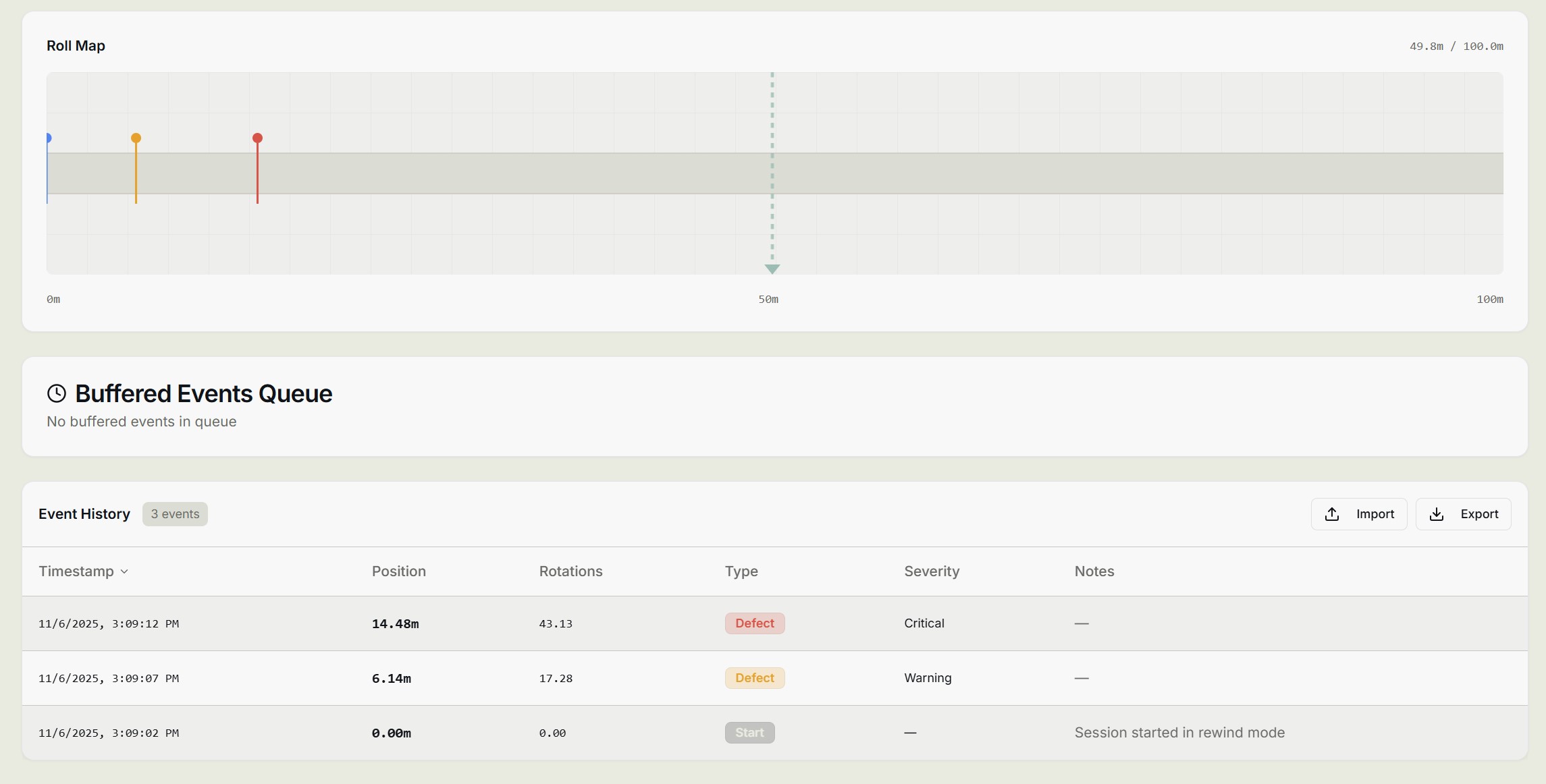
Don't just wind material — capture its exact digital replica. As material winds onto the roll, RollTagger records every millimetre, building a precise Digital Twin with complete lineage of splices, defects, and quality events. Track material integrity virtually before it ever hits the next machine.
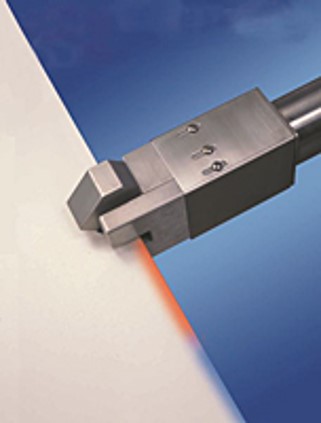
Maximize throughput and eliminate operator fatigue. RollTagger loads the roll's Digital Twin and automatically controls the unwind to separate and remove waste with pinpoint accuracy — reducing labor costs and guaranteeing defective material never reaches your customers.
Wind verification status at each 10-wind checkpoint:
Every event tagged during rewind is stored with its precise position in metres, encoder counts, roll geometry, timestamp and operator notes. During unwind, these events drive automated machine actions — eliminating manual watching and reaction.
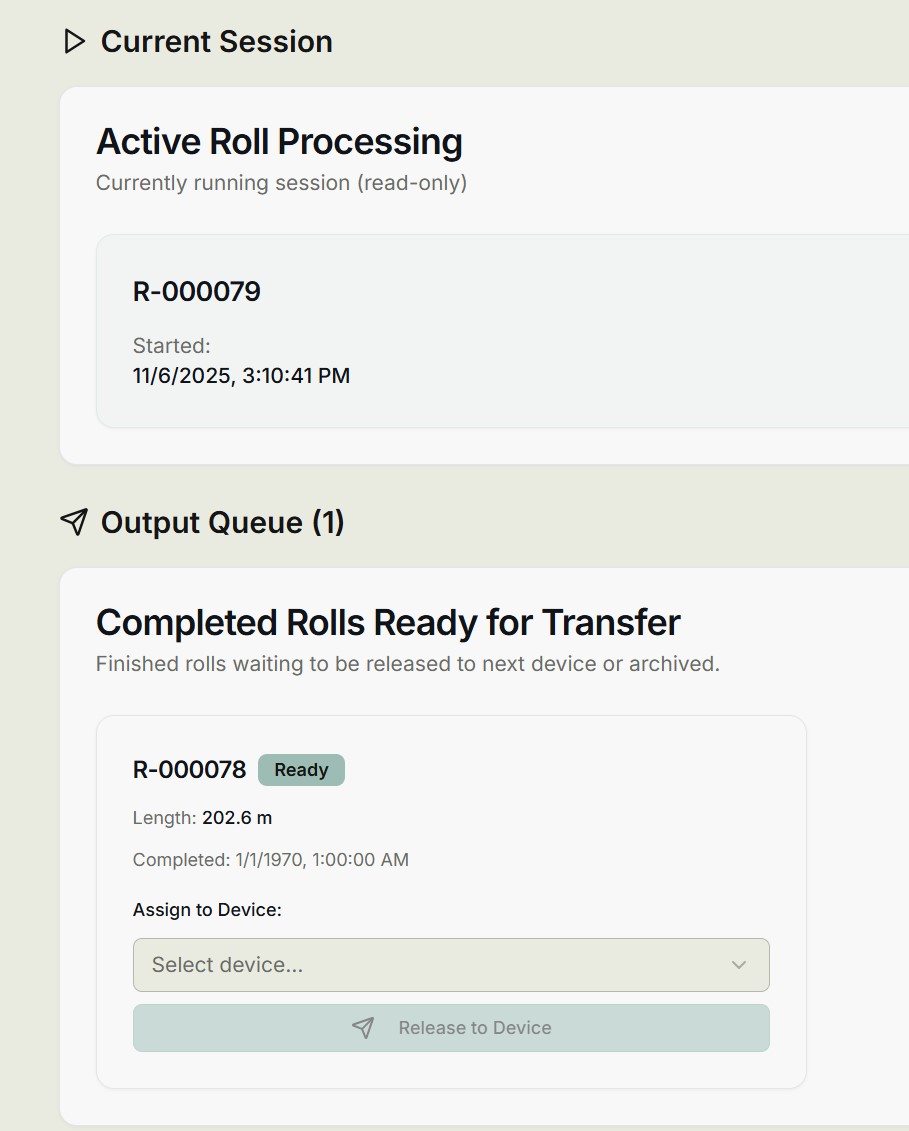
Every device in the network maintains its own Input, Output, and Backlog queue. Rolls move through the production chain automatically — from rewinder to coating line to unwinder — with full audit trail at every step.
Rolls transferred from other devices or imported from .rtag files, ordered FIFO and auto-pulled on session start.
Completed rewinds ready for transfer. Consumed unwinds kept read-only for audit. Auto-transfer to first paired device.
Historical archive with configurable retention (default 90 days). Re-pull rolls for reprocessing if needed.
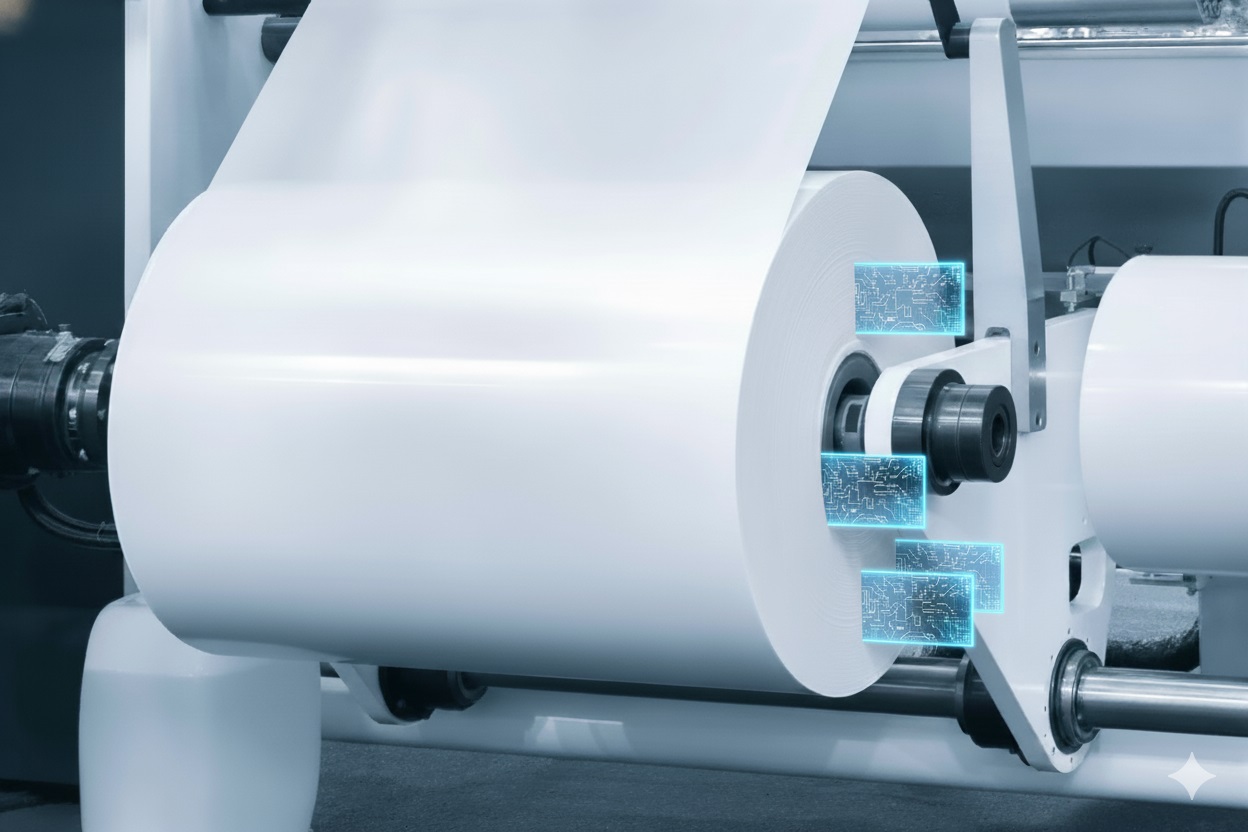
Every roll carries its complete history as it moves through the plant — turning raw defect logs into actionable business intelligence. Export data for root-cause analysis, supplier quality auditing, and compliance reporting across every production stage.
RollTagger runs entirely on the Revolution Pi Connect 4 mounted at the machine. There is no cloud account to manage, no internet dependency during production, and no data leaving the plant unless you choose to export it.